A range is one of the most important appliances in a kitchen. It supports daily cooking, meal prep, baking, boiling, frying, plus family routines.
Range repair becomes important when the appliance stops heating, burners fail, controls stop responding, or safety concerns appear. Early service can help prevent bigger problems, protect the appliance, plus keep the kitchen working properly.
Why Range Problems Need Attention?
A range combines cooktop function with oven performance, so one issue can affect several parts of the appliance. A small burner problem may seem simple, but it can point to a deeper control, heating, ignition, or wiring issue.
Professional inspection helps homeowners understand whether the issue is minor or serious. Fast attention also reduces the risk of food delays, unsafe operation, plus costly part failure.
Gas Range Service Signs
Reliable gas range repair may be needed when burners click nonstop, flames look weak, ignition delays, or the oven struggles to heat. Gas models use burners, valves, igniters, regulators, sensors, plus control parts that must work safely.
Homeowners should take gas concerns seriously. If you smell gas, leave the area, avoid switches, then contact the proper emergency service before scheduling appliance work.
Electric Range Service Signs
Professional electric range repair can help when burners stop heating, the oven temperature changes, or the control panel fails. Electric models rely on heating elements, switches, sensors, wiring, plus control boards.
Electrical problems should not be ignored. Sparks, breaker trips, burning smells, or dead controls can create safety risks that need expert testing.
Range Not Heating
A range not heating issue can affect the cooktop, oven, or both. The cause may involve power supply failure, ignition trouble, heating element damage, control board failure, or a faulty thermostat.
Basic checks may include confirming the breaker, settings, plus power source. If the range still does not heat, a trained technician should inspect the internal parts.
Burner Stops Working
A range burner not working problem can interrupt cooking quickly. One burner may fail while the rest of the appliance still works, which often points to a local part issue.
The problem may come from a damaged coil, bad igniter, weak switch, clogged burner port, or loose connection. A technician can test the burner system to find the exact cause.
Oven Section Will Not Heat
A range oven not heating issue can affect baking, roasting, plus daily meal prep. The oven may stay cold, heat slowly, or shut off before reaching the selected temperature.
Common causes include a failed igniter, damaged bake element, bad temperature sensor, thermostat problem, or electronic control issue. Proper testing helps avoid replacing the wrong part.
Temperature Problems
A range temperature problem can make meals cook unevenly. Food may burn on one side, stay undercooked in the center, or take longer than expected.
Temperature changes may come from a faulty sensor, weak heating part, damaged gasket, or control failure. A service visit can confirm whether the range is reading heat correctly.
Gas & Electric Range Fault Analysis Guide
| Symptom | Primary Failure Points | Key Indicators & Risks | Recommended Actions |
|---|---|---|---|
| Range Not Heating | Heating Elements, Igniters, Control Board, Thermostat/Sensor | No heat in cooktop or oven, breaker trips, error codes | Replace failed element/igniter first; full board test if persistent |
| Burner Stops Working | Surface Element, Igniter, Burner Valve/Switch, Wiring | Single burner dead while others function, no spark or glow | Repair or replace local burner components; inspect harness |
| Oven Section Will Not Heat | Bake/Broil Element, Glow Igniter, RTD Sensor, ECM | Oven stays cold, slow heat-up, premature shutdown | Prioritize element/igniter replacement; validate sensor calibration |
| Ignition Problems | Spark Igniter, Gas Valve, Burner Ports, Moisture Contamination | Clicking without flame, delayed ignition, flame outage | Clean/adjust burner assembly; replace weak igniter or valve |
| Weak or Uneven Flame | Clogged Burner Ports, Low Gas Pressure, Dirty Caps, Valve Issue | Yellow/orange flame, reduced BTU output, instability | Thorough cleaning; adjust or replace valve if pressure out of spec |
| Temperature Inaccuracy | RTD Sensor Drift, Faulty Thermostat, Door Gasket Leak, Control Board | Uneven cooking, over/under temperature, extended cycles | Replace sensor/gasket; recalibrate or update control board |
| Control Board Issues | Electronic Control Module (ECM) | Error codes, intermittent operation, failed cycles | Confirm secondary components before ECM replacement |
Ignition Problems
A range ignition problem is common on gas models. Burners may click without lighting, ignite slowly, or fail to stay lit during use.
Ignition issues may involve clogged burner openings, weak igniters, moisture near the burner, or gas valve trouble. Safety matters, so delayed ignition should be checked before the appliance is used again.
Control Board Issues
A range control board issue can affect heating, timer function, display response, plus cycle control. The range may show error codes, fail to start, or shut off during cooking.
Control boards should be tested before replacement. Other parts can create similar symptoms, so diagnosis helps prevent unnecessary repair costs.
Display Problems
A range display not working issue can make it difficult to set temperature, timer, clock, or cooking mode. The screen may go blank, flicker, dim, or stop responding.
Display trouble may come from wiring, control board failure, power issues, or keypad damage. A technician can test the electronic system safely.
Weak Burner Flame
A range burner weak flame can slow cooking plus affect heat control. Gas burners may produce small, uneven, yellow, or unstable flames when something is wrong.
This problem may come from clogged ports, gas pressure issues, dirty burner caps, or valve trouble. The burner should be inspected if cleaning does not restore a steady flame.
Heating Element Failure
A range heating element problem often affects electric models. A damaged element may fail to glow, heat unevenly, or stop working completely.
Heating elements can wear out from age, spills, heavy use, or electrical strain. Professional testing can confirm whether the element failed or another part controls the issue.
Knob Problems
A range knob problem can make it hard to control burner heat or oven settings. A loose, cracked, stuck, or broken knob may prevent accurate operation.
Knob issues can sometimes be simple, but they should not be ignored when gas flow or electrical control is involved. A technician can check whether the problem is only the knob or the switch behind it.
Sparking Concerns
A range sparking issue needs quick attention because it may involve moisture, damaged wiring, faulty ignition parts, or an electrical short. Sparks may appear near burners, controls, outlets, or internal components.
Stop using the range if sparking continues. A repair professional can inspect the appliance before it creates a larger safety problem.
Range Stops Working
A range stopped working situation can happen because of a tripped breaker, power failure, damaged control board, failed igniter, bad wiring, or blown fuse. The appliance may go completely dead or stop during cooking.
Homeowners can check the breaker when it is safe. If the range does not respond after basic checks, professional diagnosis is the next step.
Professional Repair Support
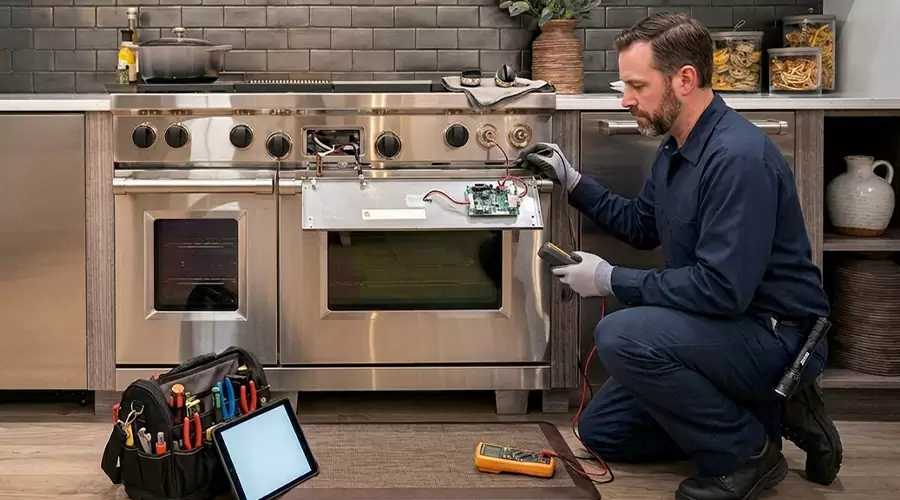
Trusted range repair services help homeowners handle heating, burner, ignition, control, plus safety issues. A service visit should include inspection, testing, explanation, repair options, plus final performance checks.
Skilled professional range repair reduces guesswork during repairs. A trained expert can test gas parts, electrical components, sensors, elements, switches, valves, plus controls.
Home Range Service
Convenient home range repair allows the technician to inspect the appliance where it is installed. This helps them check power supply, gas connection, ventilation, leveling, cabinet fit, plus surrounding conditions.
Quality residential range repair supports the appliances homeowners rely on every day. A properly working range keeps cooking routines, family meals, holidays, plus weekly food prep on schedule.
Kitchen Range Problems
Professional kitchen range repair can help when cooking performance changes suddenly. Uneven heat, weak flames, delayed ignition, dead burners, display failure, plus oven temperature swings all deserve attention.
Kitchen appliances often work under heat, grease, moisture, plus heavy daily use. Timely service helps prevent these conditions from causing larger part failures.
Role of a Technician
An experienced appliance repair technician can inspect the range, test parts, explain the issue, then recommend the best repair option. This helps homeowners understand whether the problem is simple, moderate, or urgent.
A technician should also test the range after repair. Final checks confirm heating, ignition, burner response, control function, plus safe operation.
Troubleshooting Before Service
Basic range troubleshooting can help rule out simple causes. Check the following options carefully:
- Breaker panel box status and outlet connection
- Oven temperature and digital cycle settings
- Surface burner alignment and cap placement
- Control lock feature activation status
- Visible food debris and grease accumulation around components
Avoid opening panels, touching wiring, or adjusting gas parts without training. If the issue continues, schedule service before using the appliance again.
Same Day Repair Needs
Helpful same day range repair may be needed when the range fails before a meal, during a busy week, or before a planned event. Quick service can reduce cooking delays plus restore normal use sooner.
Fast repairs are especially useful when the appliance affects daily food preparation. A technician can diagnose the problem, explain options, plus complete the repair when parts are available.
Emergency Service Signs
Urgent emergency range repair may be needed when the range sparks, smells like gas, overheats, trips the breaker, or will not shut off. Safety concerns should never wait for a regular appointment.
Turn off the appliance if it is safe to do so. Keep people away from the area until the issue is checked by a qualified professional.
Finding Local Range Help
Searching for range repair near me can help homeowners find nearby support when cooking equipment fails. Local service may offer faster scheduling plus better familiarity with common range problems in the area.
A reliable provider should communicate clearly, explain the estimate, plus give practical guidance before starting major work. Clear answers help homeowners choose the right next step.
Final Thoughts
A gas or electric range usually gives warning signs before it fails completely. Weak heat, burner failure, ignition delay, sparking, display problems, temperature swings, plus control issues should not be ignored.
Professional repair can restore safer performance, protect the appliance, plus reduce the risk of larger damage. If basic checks do not solve the issue, call a qualified technician before the range problem gets worse.